
Scientific name: Coeligena prunellei
The Black Inca is a dark, medium-sized hummingbird endemic to the Eastern Andes of Colombia. Its global population is estimated at about 7,500 mature individuals, the trend is decreasing, and it is listed as Vulnerable, monotypic, endemic to Colombia, and considered non-migratory (though small local movements are possible).
At a Glance
Family: Trochilidae (hummingbirds)
Clade: Heliantheini – Brilliants
Genus group: Coeligena — 15 species, 28 subspecies
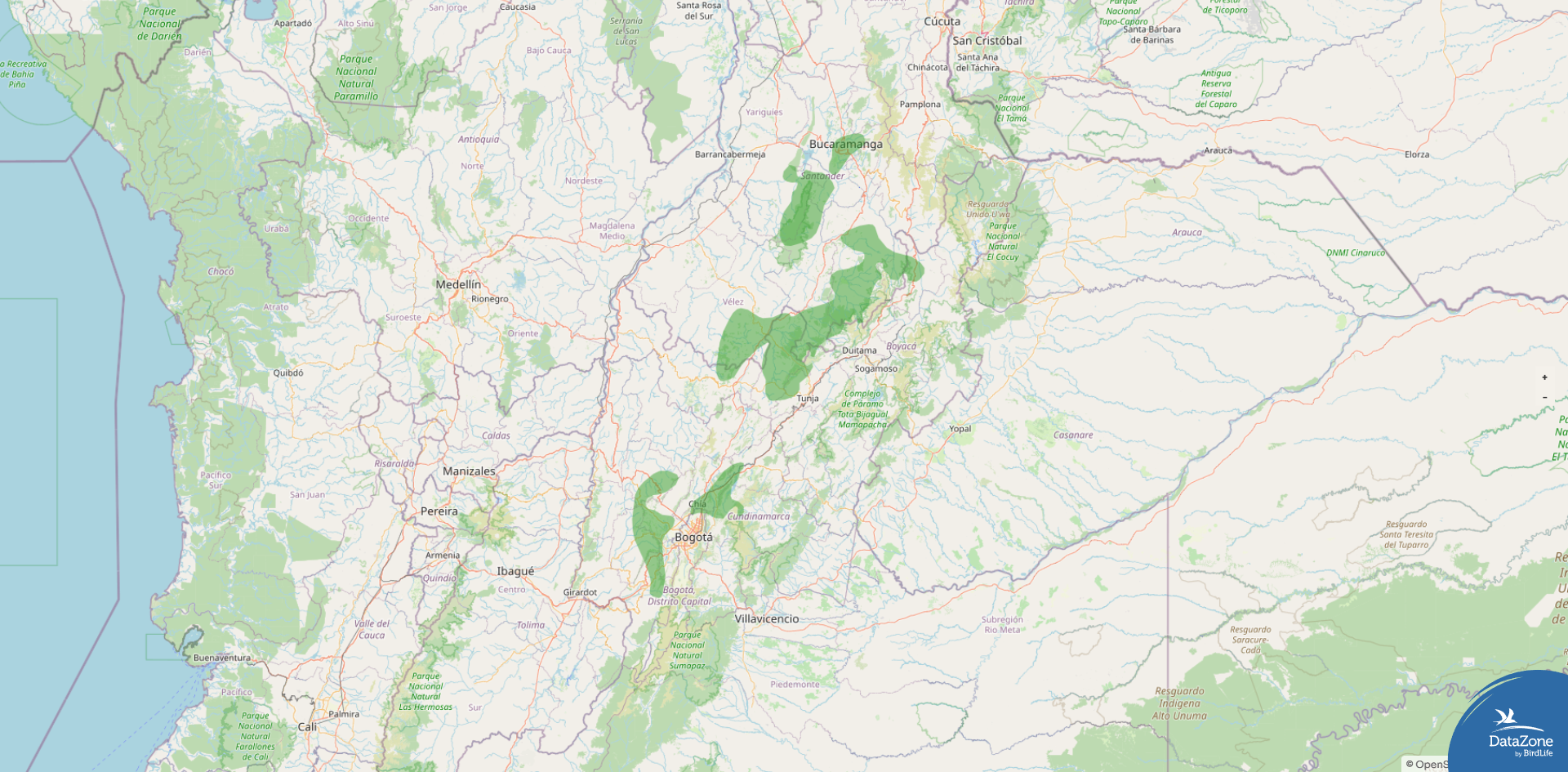
Range: West slope of the Eastern Andes of Colombia from southeastern Santander and western Boyacá south into western Cundinamarca, plus both slopes of the Serranía de los Yariguíes in Santander.
Habitat: Interior of humid montane forest, especially oak-dominated forest, and also fragmented forest, forest edges, and other human-modified wooded landscapes.
Elevation: Mostly between about 1,200 and 2,800 m in humid Andean forest zones.
Length: About 14 cm (5.5 in).
Weight: Roughly 6.6–7.0 g.
Number of mature individuals: 7,500
Population trend: Decreasing
Status: Vulnerable (IUCN)
Name Origin
The genus name Coeligena is derived from Latin for “born of heaven” or “sky-born,” a reference to the high Andean habitats and luminous plumage typical of starfrontlets and incas. The species name prunellei honors an individual associated with the bird’s discovery or early study, as is common in 19th-century nomenclature. The English name “Black Inca” captures its overall dark, purplish-black appearance and its close relationship to other “inca” hummingbirds within Coeligena.
Subspecies & Distribution
The Black Inca is monotypic, with no recognized subspecies.
Coeligena prunellei prunellei
Endemic to Colombia, found on the west slope of the Eastern Andes from southeastern Santander and western Boyacá south into western Cundinamarca, and on both slopes of the Serranía de los Yariguíes in Santander. It occupies humid montane forest and oak forest within this restricted Andean band.
Overall, the Black Inca has a small global range limited to a narrow Andean corridor in Colombia, and its habitat within this range is fragmented by clearing and land-use change.
Ledged
Green Resident
Species Overview
The Black Inca is a range-restricted Colombian endemic that inhabits humid montane and oak forests on the western flank of the Eastern Andes and in the Serranía de los Yariguíes. It often favors forest interior but can also use fragmented forest and other wooded landscapes, where it forages on nectar and small arthropods. Its modest global population size, decreasing trend, and high level of habitat loss and fragmentation have led to its classification as Vulnerable, and it is considered Endangered at the national level in Colombia.
Male Description
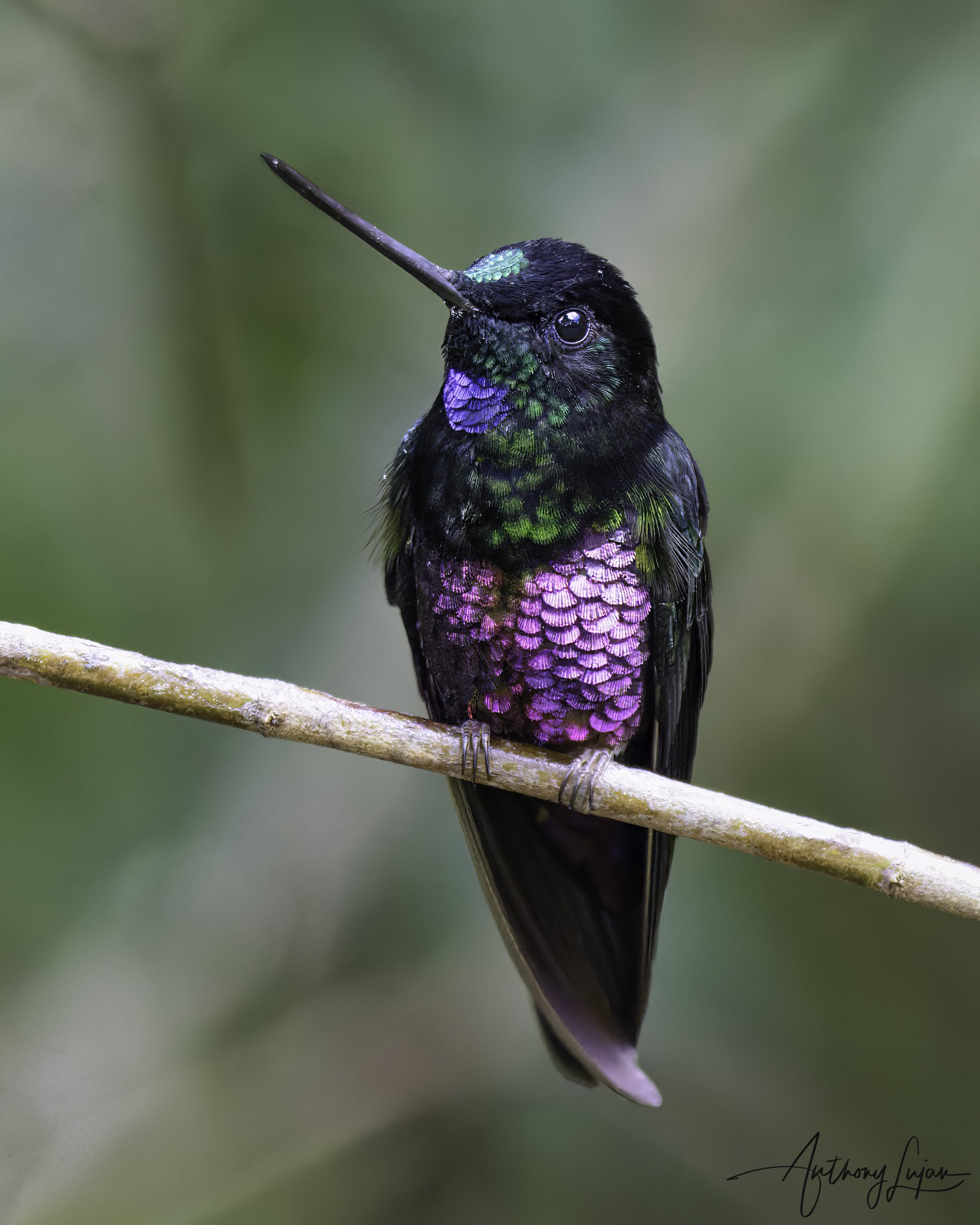
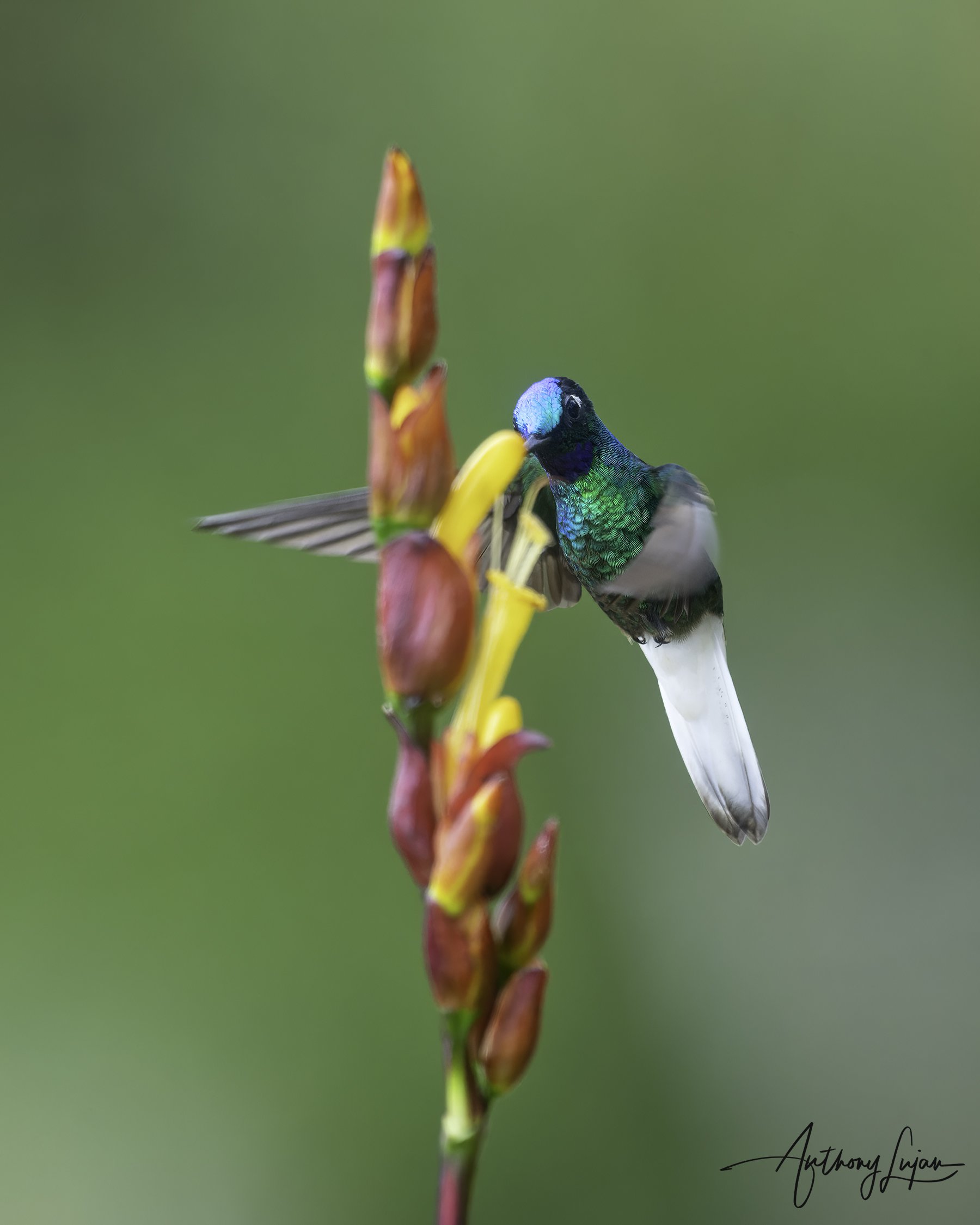
Adult males are medium-sized hummingbirds with a long, straight, black bill and a distinctive white spot behind the eye. The upperparts are dark purplish-black with dark metallic blue shoulders, and the tail is black and distinctly forked. The underparts are also dark purplish-black, set off by an iridescent blue-green gorget on the throat and a conspicuous white patch on each side of the breast. In life, males appear as mostly black hummingbirds with subtle metallic highlights, a glowing throat, and contrasting white side patches.
Female Description
Adult females are essentially similar to males but somewhat duller overall. They have the same long, black bill and white post-ocular spot, but the upperparts show less intense blue on the shoulders and the tail is less deeply forked. The underparts are dark but less glossy, and the gorget is reduced or less brilliant than in males, though the white patches at the sides of the breast are still present. Immature birds are duller than adults and typically lack a fully developed gorget, making age and sex assessment in the field more challenging.
Habitat & Behavior
Black Incas mostly inhabit the interior of humid montane forest, especially mature or semi-mature oak-dominated forest, but they can also occur in fragments, edges, and other human-influenced wooded habitats. They typically forage for nectar by trap-lining, visiting a circuit of widely scattered flowering plants rather than defending a single patch, though they may occasionally defend rich flower clusters. They feed at mid-levels within the forest and at lower levels along edges, favoring tubular red and yellow flowers of genera such as Fuchsia, Bomarea, Aetanthus, Aphelandra, Palicourea, Psammisia, and Thibaudia, but will also use introduced ornamental plants when native flowers are scarce. In addition to nectar, they glean small arthropods from foliage for protein.
Population
The global population of Black Inca is estimated at about 7,500 mature individuals and is believed to be decreasing. The species occupies a relatively small, fragmented range, and approximately 90 percent of its original forest habitat within that range has been cleared or heavily altered for settlement and agriculture. Remaining populations are scattered among forest patches of varying size and quality, increasing their vulnerability to further habitat degradation and isolation.

Conservation
Black Inca is listed as Vulnerable because of its small, declining population, restricted endemic range, and extensive loss and fragmentation of suitable habitat. Major threats include deforestation for agriculture, cattle ranching, and human settlement, particularly the clearing of oak forests and humid montane forest within its elevational band. Although the species can use some fragmented and secondary habitats, ongoing habitat loss and degradation continue to reduce available forest and increase isolation between populations. Conservation actions should prioritize protection and restoration of remaining montane and oak forests within its range, the creation or expansion of reserves in key areas, and the promotion of land-use practices that retain forest patches and corridors; more detailed population monitoring is also needed to track trends and evaluate management effectiveness.


Checkout Anthony’s playlist of this species! Click the top right dropdown to see all the videos.
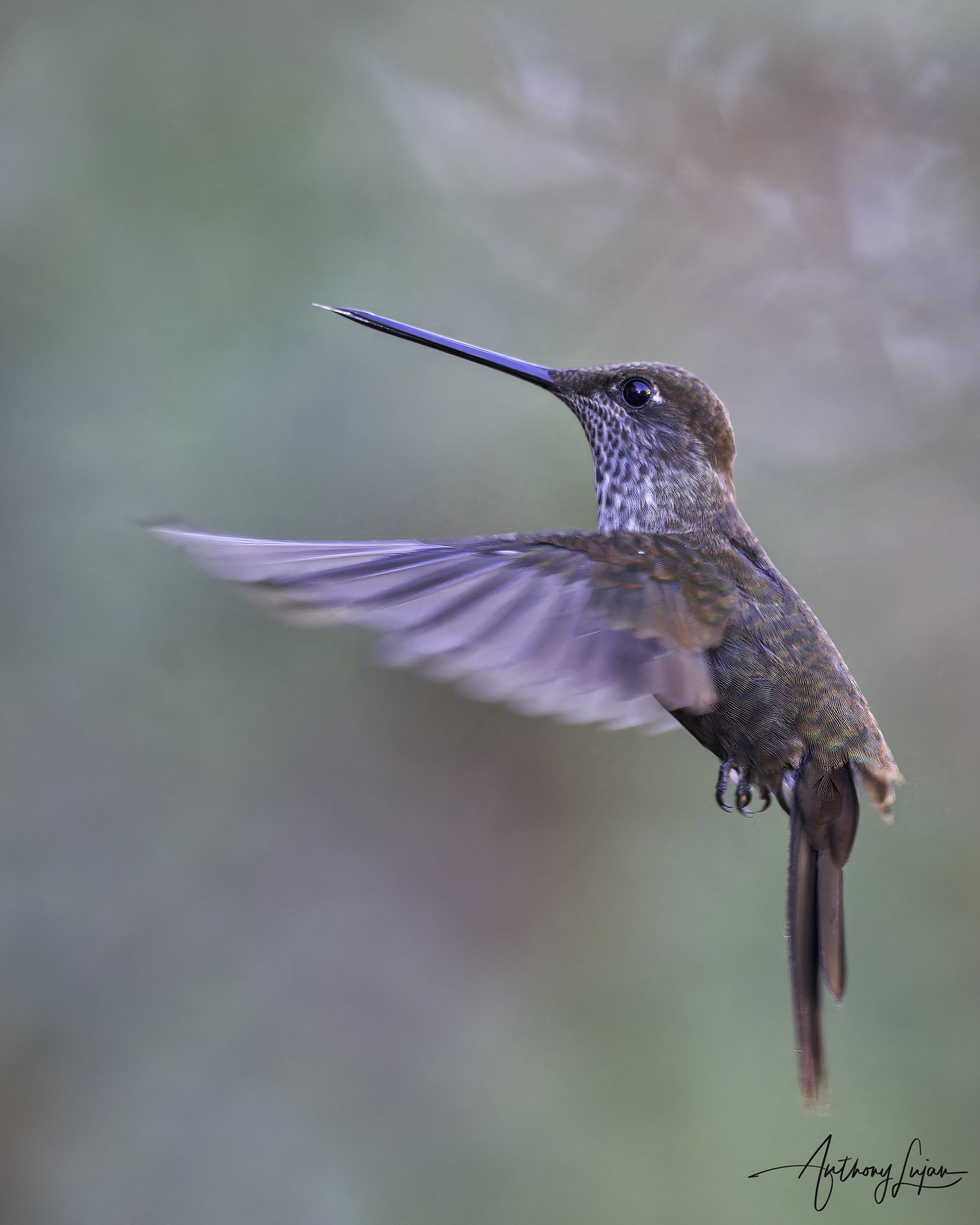
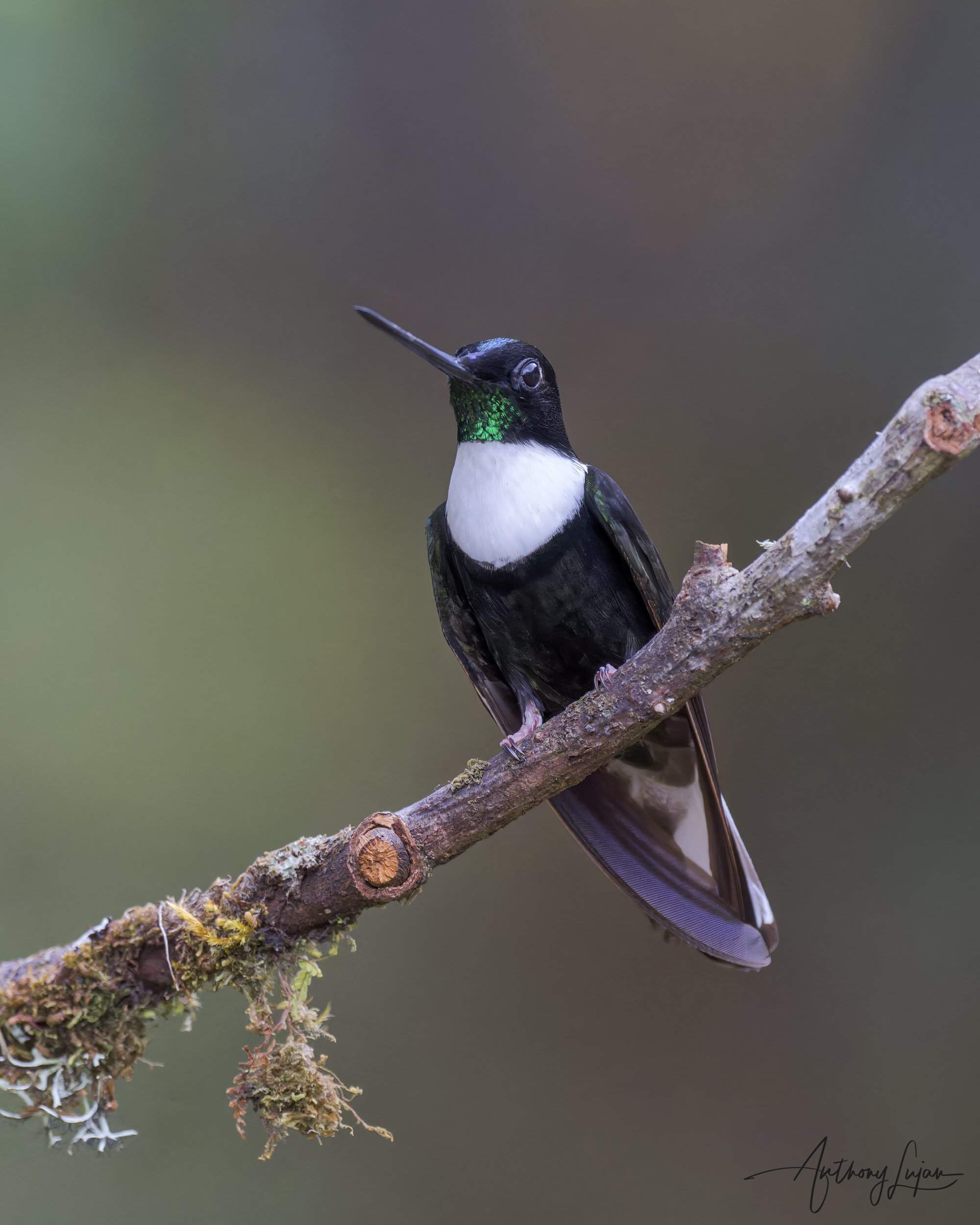
Related species in the Coeligena genus (15 species total):




Please note: The content provided in this article reflects Anthony’s personal experience and photographic approach. Results can vary depending on light, weather, location, equipment, subject behavior, and field conditions.