
Rufous Sabrewing

Scientific name: Pampa rufa
The Rufous Sabrewing is a medium-sized hummingbird of humid evergreen montane forest, pine–oak forest, and shaded plantations on the Pacific slope highlands of southern Mexico, Guatemala, and El Salvador. Its global population is estimated at 20,000–49,999 mature individuals, the overall trend is decreasing, it is considered non‑migratory, and it is currently assessed as Least Concern.
At a Glance
Family: Trochilidae (hummingbirds)
Clade: Trochilini – Emeralds
Genus: Pampa — 2 species in total
Range: Western slope of highlands from the Sierra Madre de Chiapas in southern Mexico southeast through Guatemala into western El Salvador
Habitat: Interior and edges of humid evergreen montane forest, cloud forest, pine–oak forest, and shaded coffee and other plantations
Elevation: Mostly 900–2,000 m (3,000–6,600 ft), most abundant above about 1,300 m (4,300 ft)
Length: About 12.1–14 cm (4.8–5.5 in)
Weight: Around 7.5 g (0.26 oz) on average
Number of mature individuals: 20,000–49,999
Population trend: Decreasing
Movement: Not a migrant (resident; only local movements)
IUCN Red List category: Least Concern
Name Origin
The genus name Pampa reflects an older tendency to use geographic or landscape terms for hummingbird genera, though this species is a bird of montane forests rather than open pampas. The species name rufa means “rufous” or “reddish,” describing its extensive rufous body coloration. The English name “Rufous Sabrewing” refers to both the rich rufous plumage and the slightly curved, “sabre‑like” shape of the wing typical of sabrewings in this group.
Taxonom
Pampa rufa belongs to the emerald clade (tribe Trochilini) within subfamily Trochilinae. It was originally described in Pampa, later moved into Campylopterus, and more recently returned to Pampa with the name adjusted to rufa to match the genus’ feminine gender. The genus Pampa currently contains two species in your template framework: Rufous Sabrewing (P. rufa) and Wedge-tailed Sabrewing (P. pampa).
The Rufous Sabrewing is restricted to the Pacific slope highlands of southern Mexico, Guatemala, and western El Salvador. It occurs along the western slope of the Sierra Madre de Chiapas in Oaxaca and Chiapas in Mexico, continuing southeast through the highlands of Guatemala and reaching as far as Volcán de San Salvador and El Boquerón National Park in western El Salvador. Within this region it is closely associated with humid montane forest and forest‑like plantations.
Subspecies and Distribution
Monotypic — no subspecies recognized.
Distribution:
Mexico: Pacific slope of the Sierra Madre de Chiapas in southern Oaxaca and Chiapas, in humid evergreen montane forest, cloud forest, and pine–oak forest.
Guatemala: Pacific slope highlands, especially in humid montane forest, forest edges, and shaded plantations in mid‑elevation ranges.
El Salvador: Western highlands, as far as Volcán de San Salvador and El Boquerón National Park, in similar montane forest and plantation habitats.
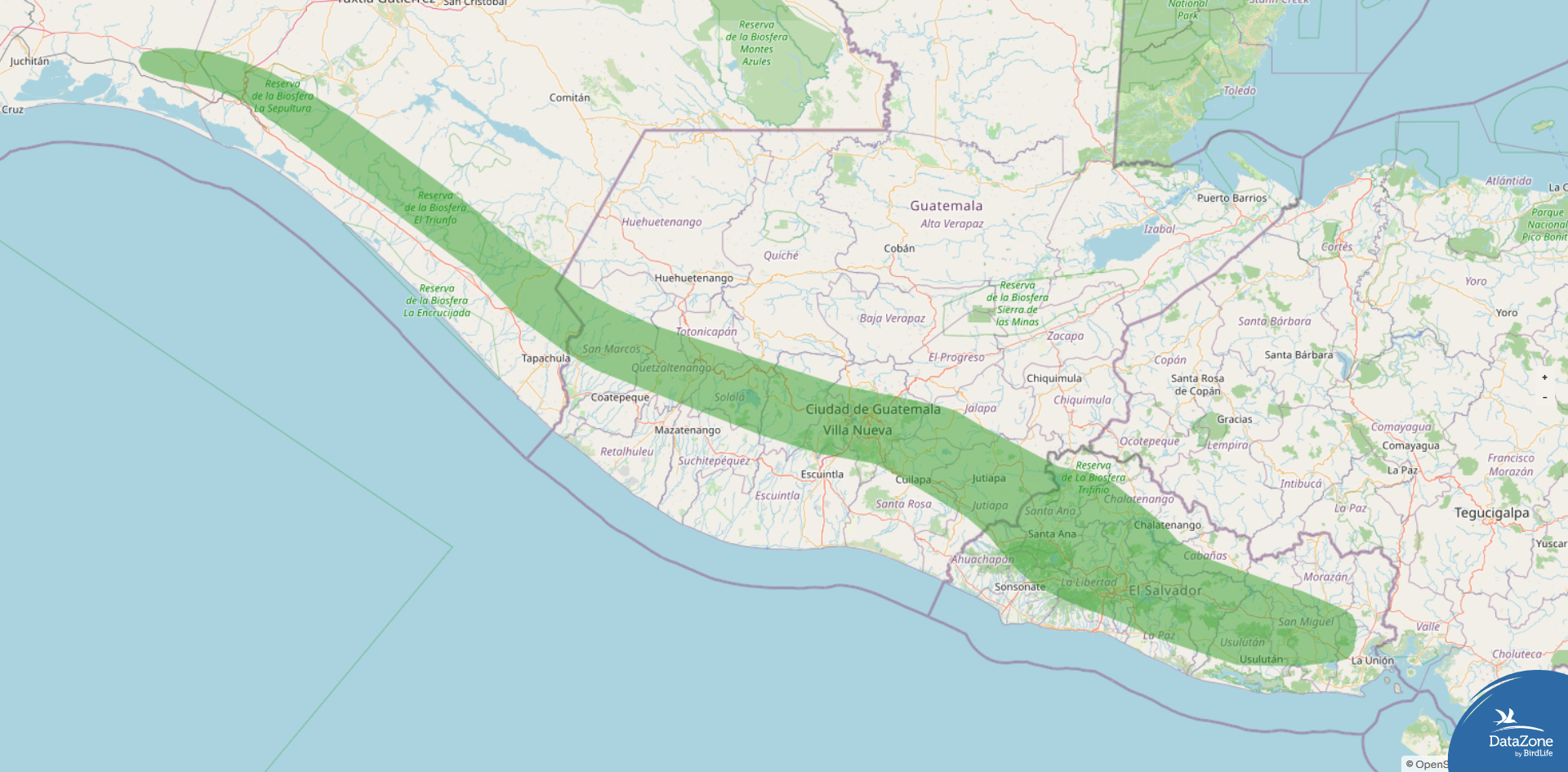
Legend
Green Resident
Species Overview
The Rufous Sabrewing is one of the largest hummingbirds in Mesoamerican montane forests, with a broad‑based bill, hefty body, and predominantly rufous underparts. It frequents the understory and lower mid‑story of humid montane forests and shaded coffee plantations, often keeping to dim, interior habitats. Although it can be fairly common locally, its overall population is relatively small and is believed to be decreasing, likely due to ongoing loss and degradation of montane forest in its limited range.
Male Description
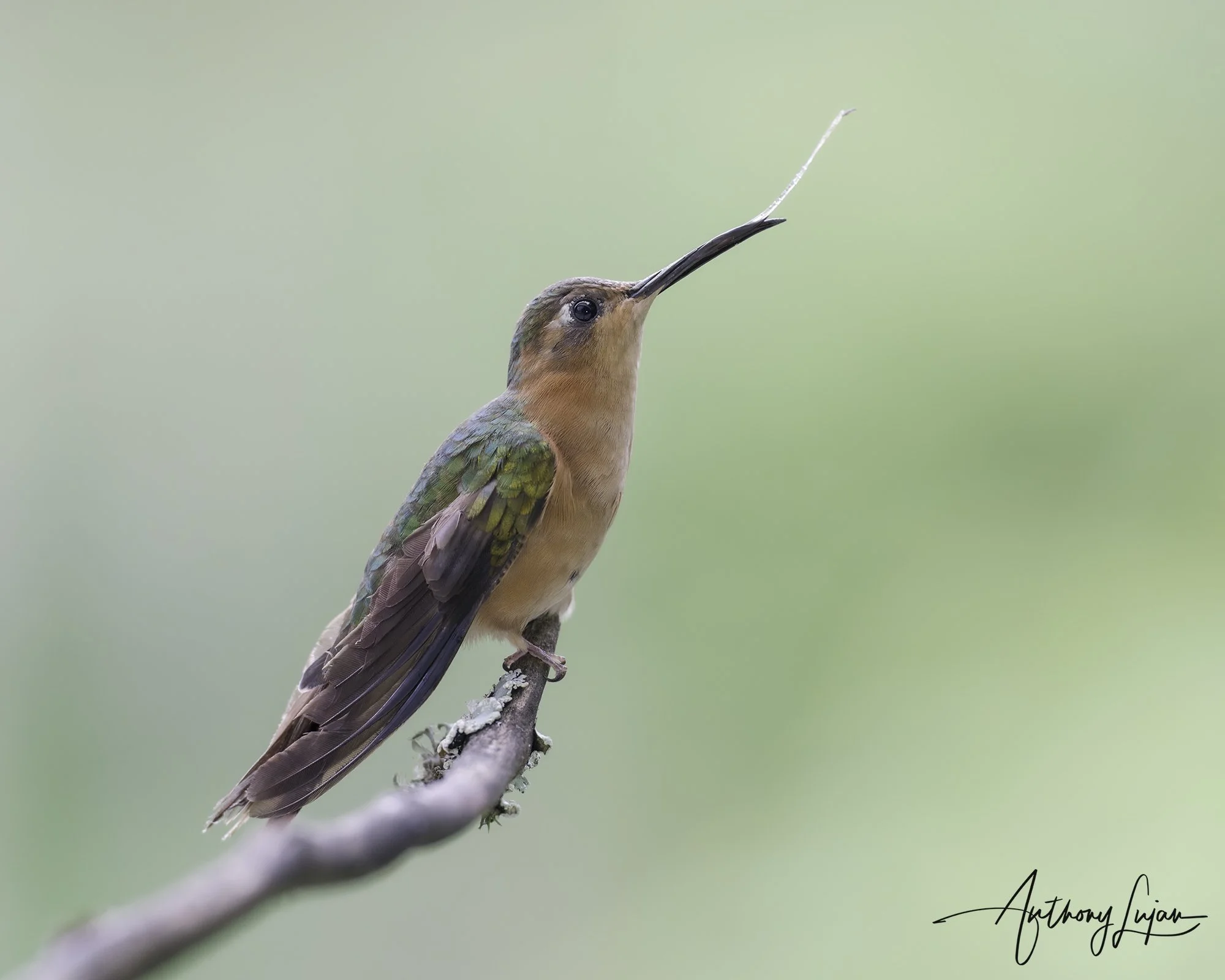
The Rufous Sabrewing is about 12.1–14 cm in length and averages around 7.5 g in weight. Both sexes have essentially the same plumage. Adults have a straight, stout, broad black bill. The crown and upperparts are bronzy‑green to golden‑green, with a slightly duller nape and mantle. A narrow whitish line behind the eye may be present but is usually faint.
The throat and chest are dusky to grayish, blending into rich rufous underparts; the belly, flanks, and undertail coverts are warm rufous to cinnamon, giving the bird its name. The wings are dusky with greenish gloss, and the tail is bronzy‑green with rufous or cinnamon tones on the bases of the outer feathers and slightly darker tips, appearing more modest than in some other large hummingbirds. Overall, the bird looks like a solid, bronzy‑green hummingbird above with strong rufous coloration below.
Female Description
Females are very similar to males, sharing the bronzy‑green upperparts and extensive rufous underparts. Any sexual dimorphism is subtle, mainly in slightly smaller average size and potentially marginally duller tones, but field separation by sex is difficult. Juveniles resemble adults, though they may show slightly duller greens and rufous tones and fresher feather edges until they molt into fully adult plumage.
Habitat & Behavior
Rufous Sabrewings inhabit the interior and edges of humid evergreen montane forest, cloud forest, pine–oak forest, and shaded coffee and other plantations. They tend to remain in the understory and lower mid‑story, especially along forested ravines, trails, and edges where flowering shrubs and small trees are abundant. They are typically found between about 900 and 2,000 m, with highest densities above approximately 1,300 m.
They forage for nectar at a variety of flowering plants, shrubs, and trees, often staying relatively low but sometimes venturing up into the canopy at forest edges. Flowers of forest shrubs and shade‑tolerant plants, as well as those in shaded coffee plantations, are important nectar sources. In addition to nectar, they take small insects, hawking them from perches in short sallies. Foraging is often deliberate and methodical, with birds working a circuit of flowers rather than aggressively defending a single patch, though they may chase intruders away from favored resources.
Breeding
The breeding biology of the Rufous Sabrewing is not fully documented, but available observations show that the female builds a small cup nest of moss lined with soft plant fibers such as thistle down, binding the structure together with spiderweb. The outside of the nest is often covered in lichen, and some of the moss may hang down in a “beard” below the cup.
Nests are typically placed on thin, often exposed branches within about 2 m of the ground in forest understory, along trails, or in lightly disturbed forest patches. The typical clutch consists of two white eggs. The female incubates the eggs for about 15–16 days, and the chicks fledge 23–26 days after hatching, which is relatively long for a hummingbird and consistent with the species’ larger size.
Movement
The Rufous Sabrewing is considered non‑migratory and is treated as a resident species. It does not undertake large‑scale seasonal migrations, though some local movements likely occur along elevational gradients and between forest and plantation mosaics as birds track flower availability and local weather patterns. These movements are limited and remain within the same general mountain ranges on the Pacific slope.
Population
The global population is estimated at 20,000–49,999 mature individuals, making it relatively scarce on a global scale. It has a fairly restricted range limited to the Pacific slope highlands of southern Mexico, Guatemala, and western El Salvador. Within this range it is locally fairly common in suitable forest and shaded plantation habitats but is absent from extensive areas where forest has been cleared or heavily degraded. Ongoing habitat loss and fragmentation in montane forests are believed to be causing a slow but persistent decline.

Conservation
The Rufous Sabrewing is currently assessed as Least Concern, but its small global population, limited range, and decreasing trend warrant attention. It depends on humid montane forest and shaded coffee and other plantations that retain a forest‑like structure. Continued deforestation, forest degradation, conversion of shade coffee to sun coffee, and other land‑use changes threaten its habitats. Conservation of montane forests, promotion of shade‑grown coffee and other agroforestry systems, and protection of key highland forest blocks and corridors in southern Mexico, Guatemala, and El Salvador are important for maintaining stable populations.



Checkout Anthony’s playlist of this species! Click the top right dropdown to see all the videos.
Related species in the Pampa genus (2 species in total):


Please note: The content provided in this article reflects Anthony’s personal experience and photographic approach. Results can vary depending on light, weather, location, equipment, subject behavior, and field conditions.