
Scientific name: Lampornis calolaemus
The Purple-throated Mountain-gem is a striking highland hummingbird of southern Nicaragua, Costa Rica, and western Panama. It inhabits humid montane forests, cloudforest, and forest edges on steep slopes, where males flash a vivid purple throat and bold facial pattern. With an estimated 50,000–499,999 mature individuals and a Decreasing population trend, it is currently assessed as Least Concern.
At a Glance
Family: Trochilidae (hummingbirds)
Clade: Mellisugini – “Bee” hummingbirds
Genus group: Lampornis — mountain-gems, medium to large highland hummingbirds with bold facial patterns and colorful throats
Range: Southern Nicaragua, northern and central Costa Rica, and western Panama
Habitat: Humid montane evergreen forest and cloudforest, forest edges, clearings with flowering shrubs, secondary growth, and highland gardens in hilly terrain
Elevation: Mostly 800–2,500 m (2,600–8,200 ft), locally down to about 300 m after breeding in some areas
Length: About 10–11.5 cm (3.9–4.5 in)
Weight: Roughly 4.5–6.5 g (0.16–0.23 oz)
Number of mature individuals: 50,000–499,999
Population trend: Decreasing
Status: Least Concern (IUCN)
Name Origin
The genus name Lampornis combines Greek lampros (“bright,” “shining”) and ornis (“bird”), referring to the bright, glittering throats and bold patterns of mountain-gems. The species name calolaemus comes from Greek kalos (“beautiful”) and laimos (“throat”), literally “beautiful-throated.” Together, Lampornis calolaemus means “bright, beautiful‑throated bird,” a perfect description of the male’s glowing purple gorget.
Subspecies and Distribution
Three subspecies:
Lampornis calolaemus pectoralis
Distribution: Mountains of southern Nicaragua and northwestern Costa Rica (e.g., Cordillera de Guanacaste).Lampornis calolaemus calolaemus
Distribution: Central and northern Costa Rica, including Cordillera Central and northern Cordillera de Talamanca.Lampornis calolaemus homogenes
Distribution: Southern Costa Rica (Pacific slope of extreme southern Costa Rica) and western Panama, from Chiriquí Province east to Coclé Province.
Across these subspecies, Purple-throated Mountain-gem is found from southern Nicaragua through much of montane Costa Rica into western Panama, where it inhabits humid montane evergreen forest and cloudforest, forest edges, and flower‑rich second growth between about 800 and 2,500 m, occasionally descending to around 300 m after breeding.
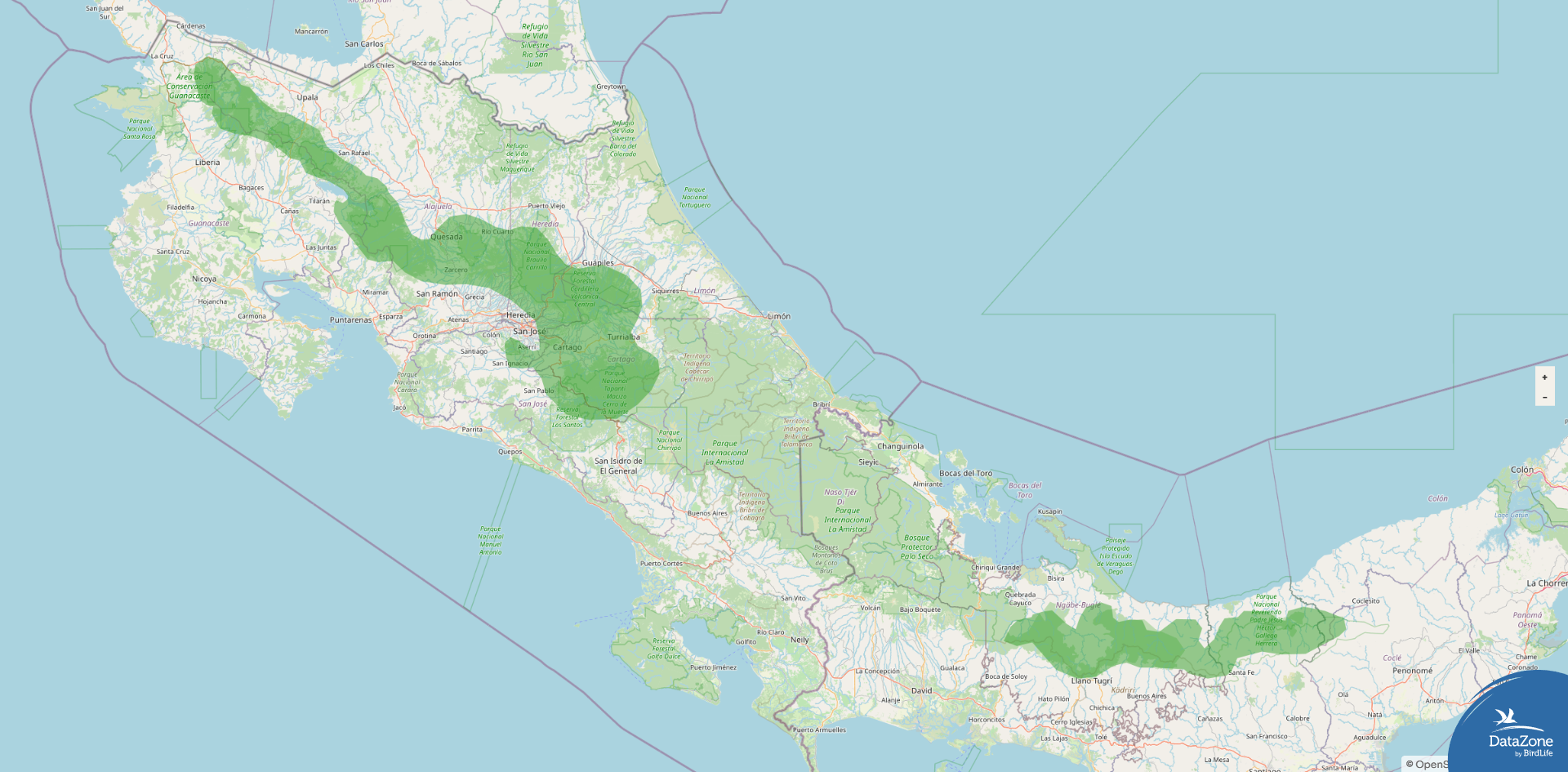
Legend
Green Resident
Species Overview
The Purple-throated Mountain-gem is a classic mid‑ and upper‑elevation hummingbird of Central American cloudforests, often visiting gardens and forest edges where flowering shrubs are abundant. Males are particularly eye‑catching with their glittering purple throats, blue crowns, and bold white facial stripes. Although its global population is modest (50,000–499,999 mature individuals) and thought to be Decreasing, much of its range still includes relatively intact montane forest, and the species shows some resilience to moderate habitat alteration.
Identification
Male
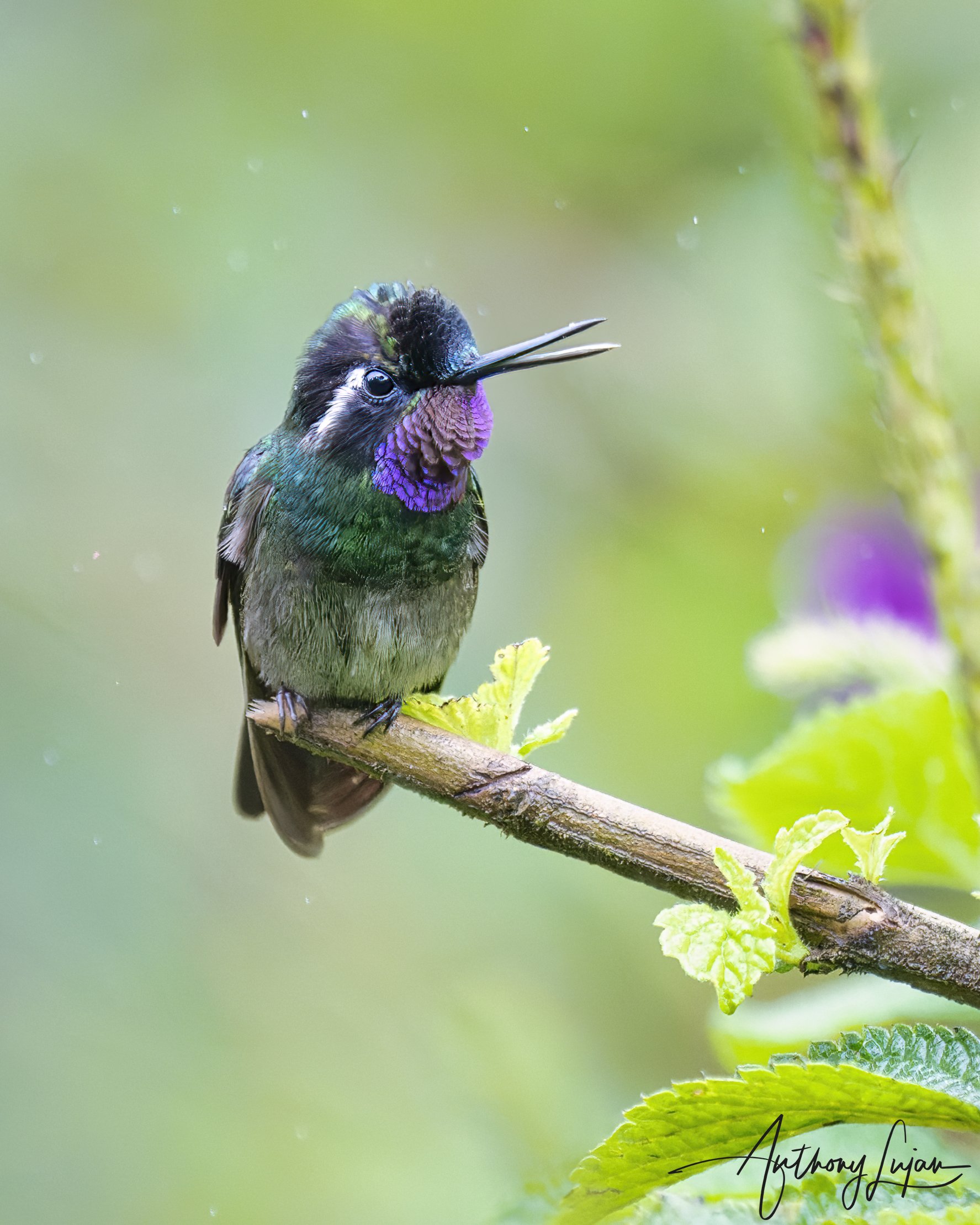
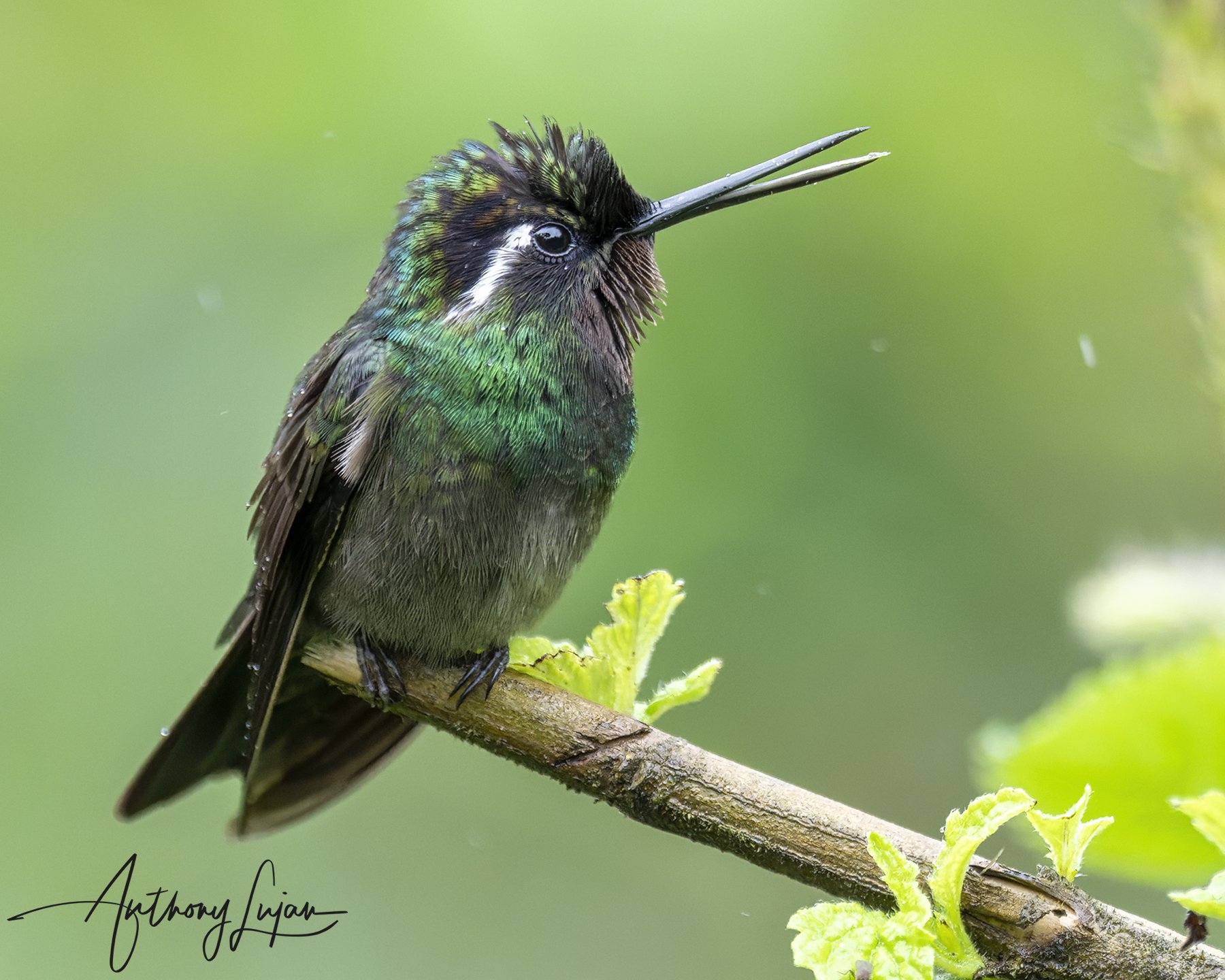
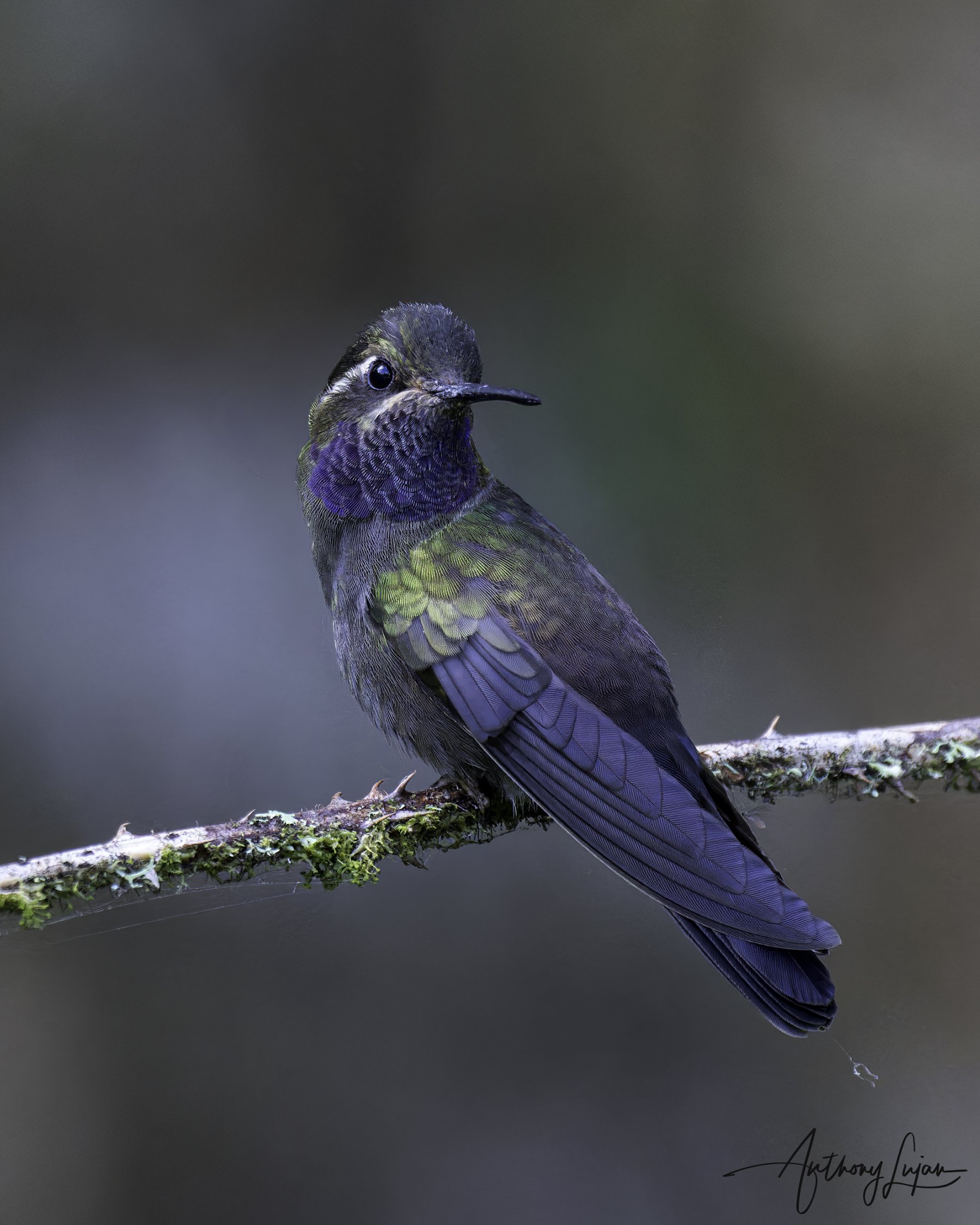
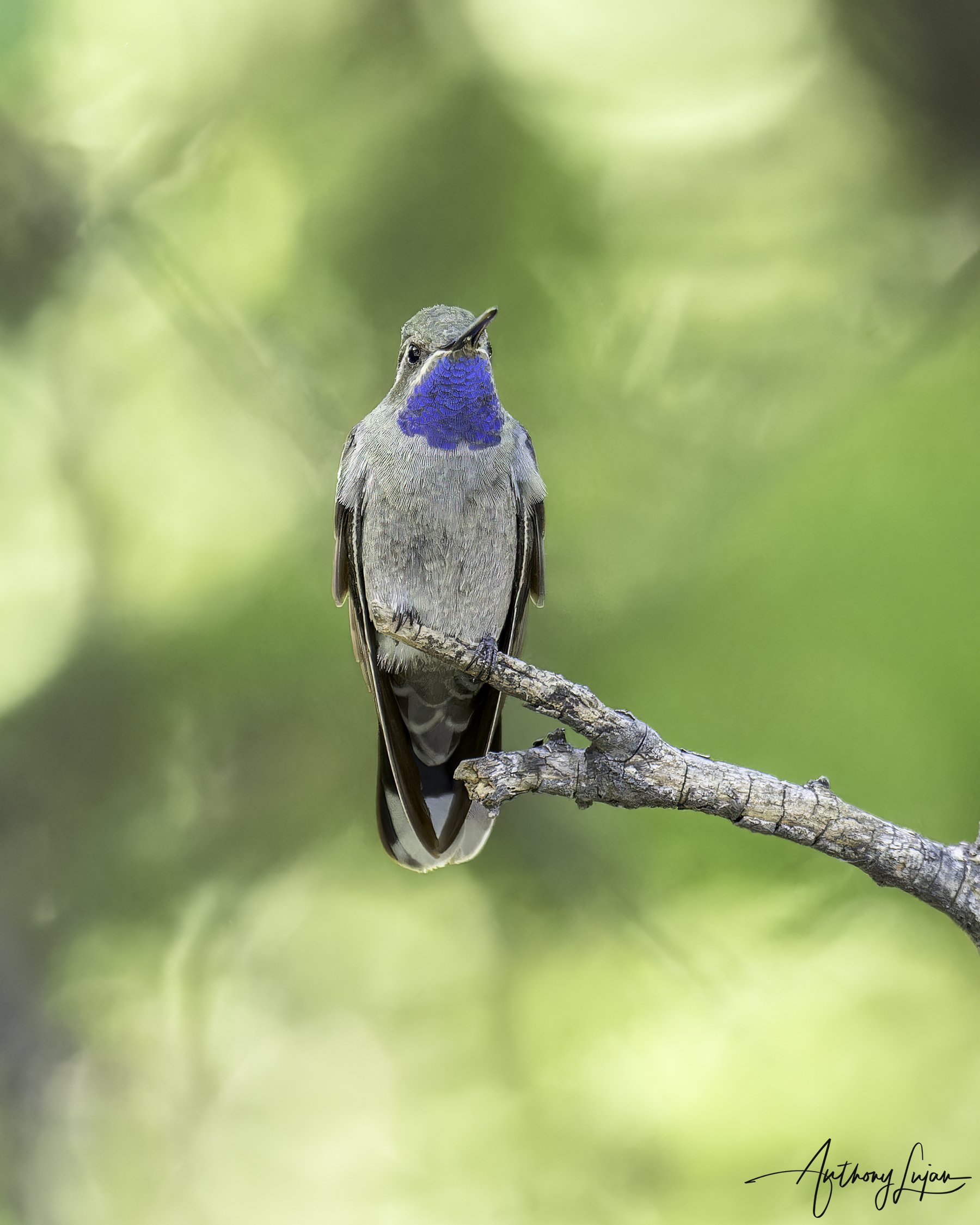
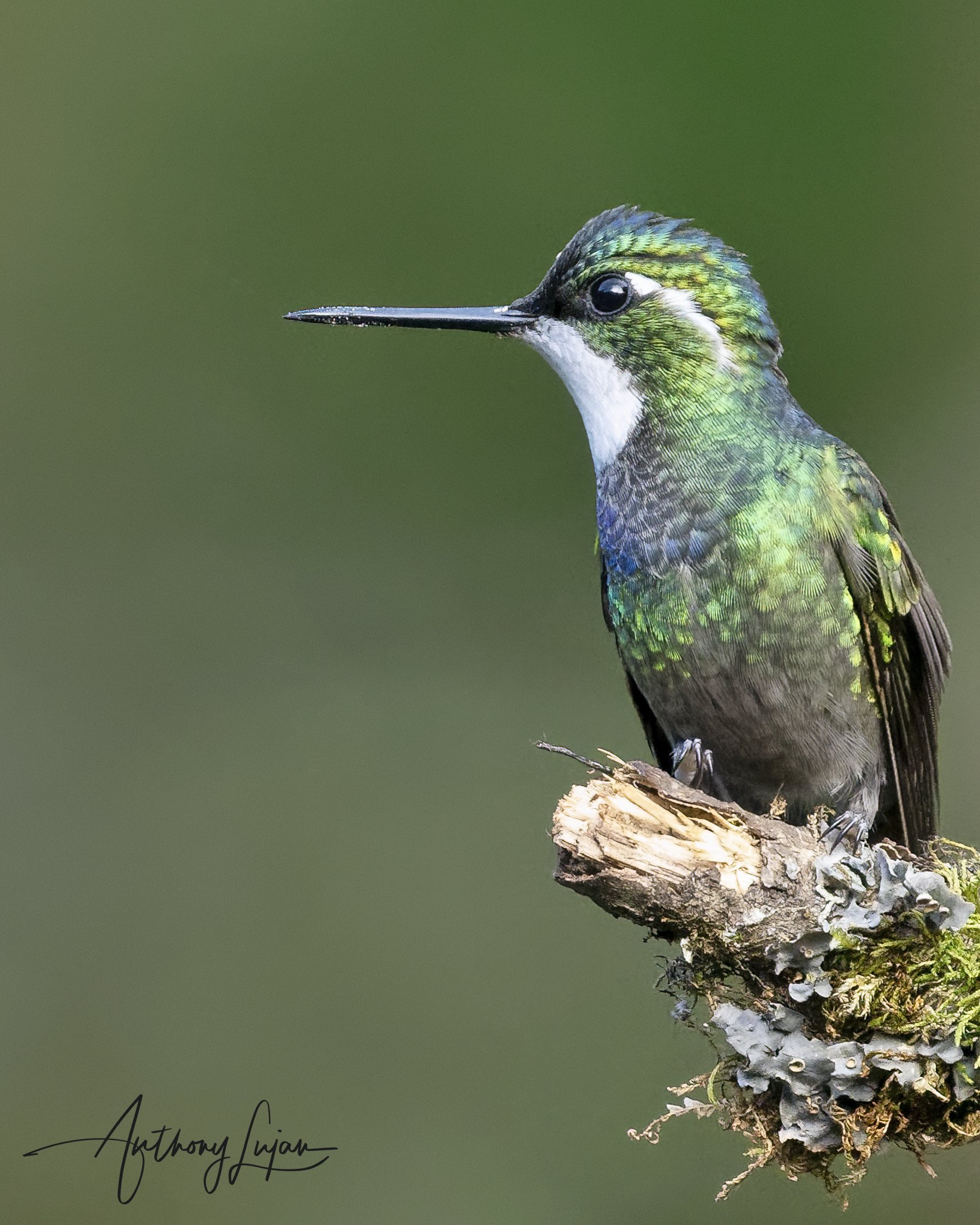
Adult males have an emerald‑ to bluish‑green forehead and crown, with metallic bronze‑green upperparts shading to bluish or grass‑green on the uppertail coverts. The face is largely dusky bronze‑green but framed by a bold white stripe behind the eye and a whitish moustachial line, creating a strong facial pattern. The gorget is metallic violet to purple, forming the namesake purple throat that can appear dark until it catches the light, while the breast is bright metallic green and the flanks and belly are bronzy green to grayish. The tail is dull blue‑black, relatively long, and slightly notched; the bill is straight and dark.
Female
Females lack the solid purple gorget and instead show a whitish to grayish throat with some spotting or wash, and a paler grayish breast and belly. The upperparts are metallic green, and they share the general facial pattern of the male but with slightly less contrast. The tail is dark with some paler edging and slightly shorter‑looking than in males relative to body size. Juveniles resemble adult females until young males begin to develop bluish crowns and purple throat feathers.
Habitat and Behavior
Purple-throated Mountain-gems inhabit humid montane evergreen forest and cloudforest, especially on steep slopes and broken terrain, as well as edges, clearings with flowering shrubs, secondary growth, and highland gardens. They occur mostly between about 800 and 2,500 m in central Costa Rica, down to around 800 m in northern Costa Rica and occasionally descending to about 300 m after the breeding season. The species uses both Caribbean and Pacific slopes wherever suitable montane forest and flowering plants are present.
They feed mostly on nectar taken from a wide variety of tubular flowers, including forest shrubs, understory plants, and garden ornamentals, and are primary pollinators of plants such as Psychotria elata and Palicourea lasiorrachis. Like other hummingbirds, they also take small insects and other arthropods for protein. Males aggressively defend flower patches from other hummingbirds, from conspecific males, and even from females outside courtship, while females often feed by trap‑lining among dispersed nectar sources.
Population and Threats
Purple-throated Mountain-gem has an estimated global population of 50,000–499,999 mature individuals, and its population is thought to be Decreasing. The species is dependent on humid montane forest and cloudforest, habitats that have experienced local loss and degradation due to agriculture, logging, and development in parts of its range. Nevertheless, significant portions of its range remain forested, and studies indicate that populations can be resilient where some forest and edge habitat are retained.

Conservation
Conservation of Purple-throated Mountain-gem focuses on protecting montane evergreen and cloudforests in southern Nicaragua, Costa Rica, and western Panama. Maintaining forest cover, preserving forest edges and second growth with abundant flowering shrubs, and safeguarding highland gardens and agroforestry systems with native plants all support this species. Many populations occur within protected areas, but continued monitoring of habitat change and population trends is needed to ensure this beautiful, purple‑throated hummingbird remains a common feature of Central American highlands.
Below is the Purple-throated Mountain-gem (Lampornis calolaemus calolaemus)
Photographed at Corso Lechería Tour, Catarata del Toro, La Paz Waterfalls, and Hotel Quelitales, Alajuela and Cartago, Costa Rica
These individuals belong to the subspecies calolaemus, which inhabits the Cordillera Central and northern Talamanca in central Costa Rica. It is the nominate form, showing the full intensity of the male’s brilliant purple gorget, green upperparts, and white breast band. This population occupies mid to upper montane zones and is known for being especially bold and aggressive around feeding territories.



Interested in coming along? Visit Travel with Me!
Also visit Costa Rica Hummingbird Expedition | July 2021 | 10 Species | Where It All Started
Also visit Costa Rica Hummingbird Expedition | November 2021 | 22 New Species | Second Chances
Also visit Costa Rica Hummingbird Expedition | July 2025 | 32 Species | 10 New | Closing the Gap
Checkout Anthony’s playlist of this species! Click the top right dropdown to see all the videos.
Related species in the Lampornis genus (7 species total):


Please note: The content provided in this article reflects Anthony’s personal experience and photographic approach. Results can vary depending on light, weather, location, equipment, subject behavior, and field conditions.